Obwohl Gerüche ein natürliches und unvermeidbares Nebenprodukt der Zersetzung organischer Materialien sind, ergreift die WPWMA umfassende Maßnahmen, um das Potenzial für Gerüche außerhalb des Geländes proaktiv zu reduzieren.
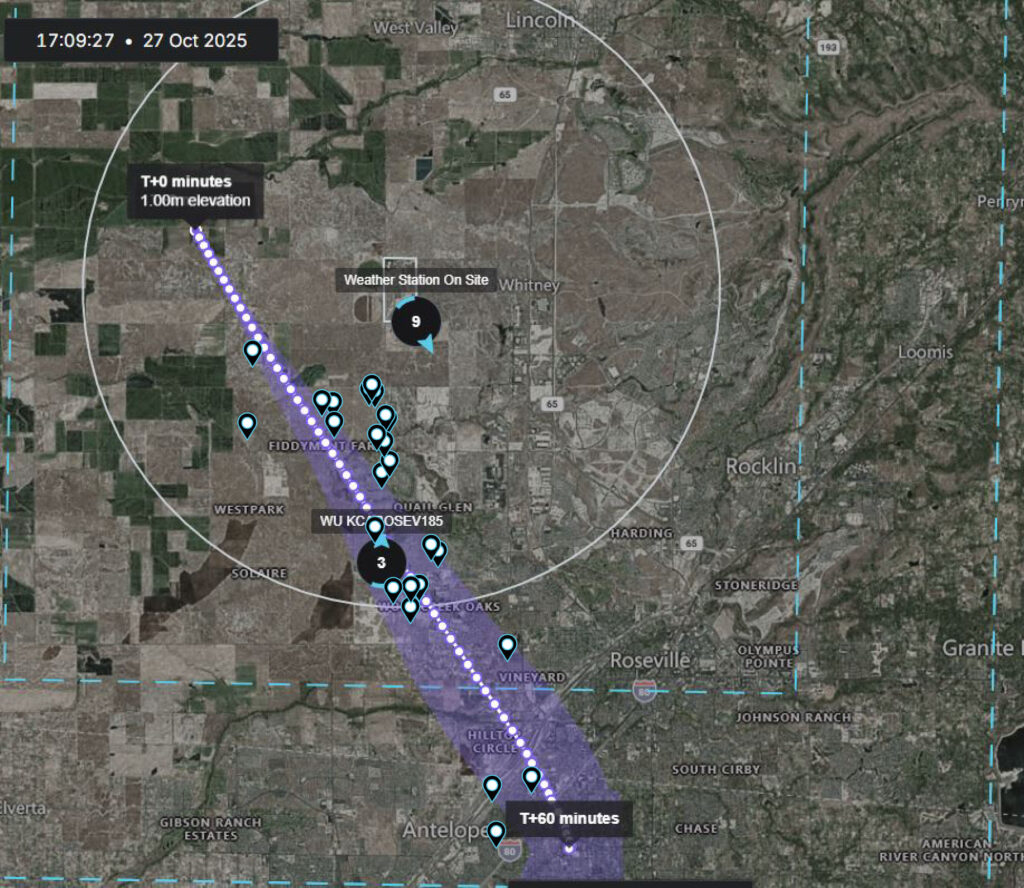
Wir nutzen ein Geruchsüberwachungssystem, das spezifische Gerüche und deren Intensität an verschiedenen Standorten auf dem Gelände der WPWMA und außerhalb kontinuierlich misst. Diese Daten werden mit Daten der Wetterstation vor Ort verknüpft, um Ausbreitungsmodelle der gemessenen und geschätzten Gerüche zu erstellen.
Die Mitarbeiter der WPWMA überwachen kontinuierlich den Anlagenbetrieb und die Wetterbedingungen, um potenzielle Geruchsquellen zu identifizieren und zu minimieren. Das Geruchsüberwachungssystem unterstützt die Untersuchung gemeldeter Gerüche, hilft bei der besseren Analyse der Kombination aus betrieblichen und meteorologischen Bedingungen, die zu Geruchsbeeinträchtigungen in der Gemeinde führen können, und bewertet die relative Wirksamkeit spezifischer Maßnahmen zur Geruchsreduzierung.
Die WPWMA arbeitete mit dem Placer County Air Pollution Control District zusammen, um ein Standortweiter Geruchsplan (SWOP), ein Tool für die WPWMA und ihre Anlagenbetreiber, Auftragnehmer, Berater und Pächter zur Reduzierung des Geruchspotenzials außerhalb des Geländes. Der Plan wurde im Dezember 2020 vom WPWMA-Vorstand genehmigt und zuletzt im Januar 2025 aktualisiert.
Der SWOP bietet präzise Informationen zu Geruchsquellen in Anlagen. Die WPWMA nutzt den SWOP als Leitfaden zur Überwachung betrieblicher und meteorologischer Bedingungen, die die Geruchswahrnehmung verstärken können. Der SWOP enthält Maßnahmen, die die WPWMA ergreifen kann, um das Geruchspotenzial in Anlagen zu reduzieren.
Answers to the WPWMA’s Frequently Asked Questions about facility operations and long-term plans.
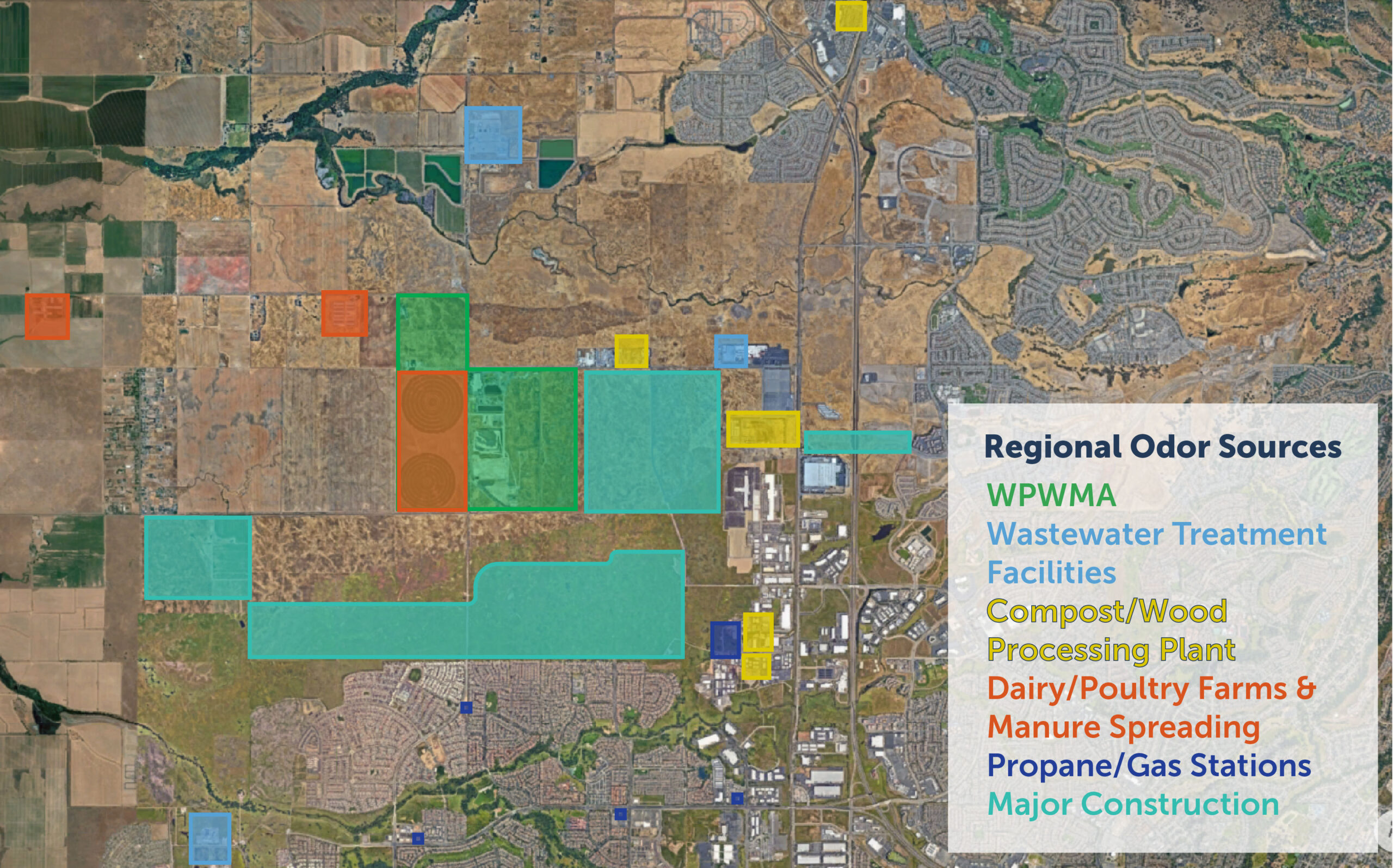
Regional odors do not just come from the WPWMA’s campus. While the WPWMA is often the most visible source of odors, there are many other potential odor sources nearby, including dairy and poultry farms, wastewater treatment plants, wood waste plants, major construction projects, and the WPWMA’s operations. At the WPWMA, the overwhelming majority of odors come from our composting operation, not the landfill itself. As part of the WPWMA’s $120 million facility improvement project, we constructed new composting facilities for green waste and food waste designed to reduce offsite odor potential by 84% and 95%, respectively. The WPWMA will conduct occasional odor studies to assess the impact of offsite odors and is planning to conduct a new study in 2027 to examine how these recent improvements have changed regional odor conditions.
Reducing the impact of our operations on our neighbors is a priority. As outlined in our Standortweiter Geruchsplan (SWOP), the WPWMA’s staff and contractors operate according to best management practices designed to reduce the potential for odors to travel offsite. For example, we cover highly odiferous food waste within one hour of being dropped off at our composting facility. Our staff also monitors weather conditions, utilizes early-detection odor sensors, and runs projections in modeling software.
Let us know! We encourage residents to submit an Odor Notification form as soon as you’re experiencing the odor to help us investigate it most effectively. Odor Notifications help us identify where an odor may be coming from (at the WPWMA or somewhere else in the region) and investigate any conditions that could have exacerbated it.
The WPWMA has 100+ years of remaining capacity for our landfill sites, based on current projections. Additionally, the WPWMA continues to invest in technologies and practices that reduce impacts and expand the lifetime of the landfill.
Never. Due to extreme costs and logistical issues, it is nearly impossible to excavate and entirely move landfills. When a landfill site is closed (no longer accepting waste), protective liner layers and final soil caps are placed over any waste, and the site must be monitored for at least 30 years. The WPWMA develops the landfill in 20-acre areas, called modules or cells, designed to last approximately 10 to 15 years each. As each module fills, the WPWMA periodically “closes” areas of the landfill over time.
Absolutely not! In Placer County, all trash, recyclables, and food scraps are collected together in one bin and are all sorted at a Materials Recovery Facility (MRF), guaranteeing valuable recyclable and compostable materials are kept out of the landfill.
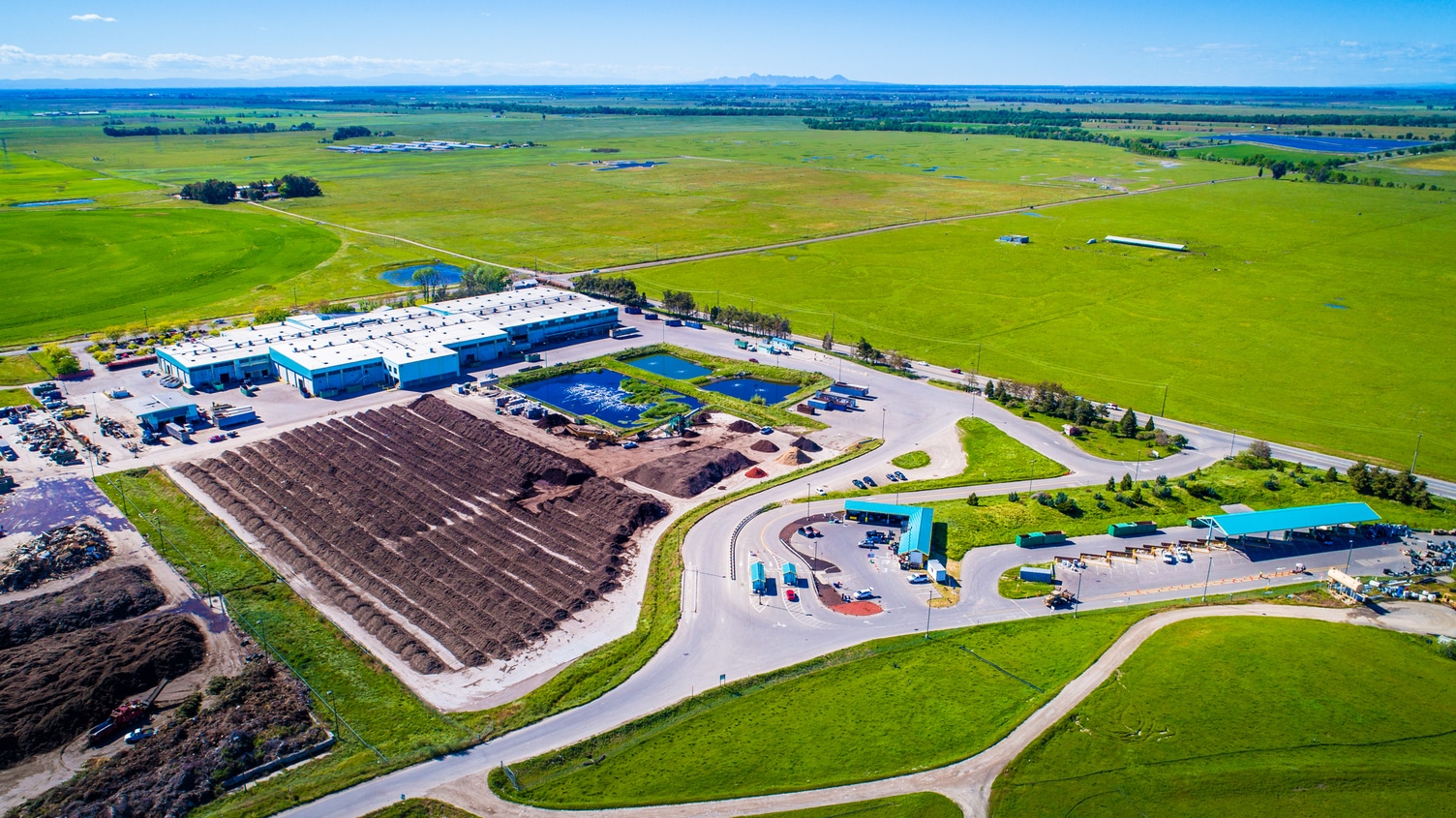
No! While the landfill is certainly our largest facility, the WPWMA’s campus is home to many more facilities. We recover recyclables at the MRF, turn organic materials (like food scraps and green waste) into compost, recycle construction debris, capture methane gas at the landfill to produce renewable electricity, and run a public disposal facility where residents can drop off general refuse for a Gebühr and separated recyclables, Household Hazardous Waste (HHW), & electronic waste for FREE!
Aktualisierung vom 2. November 2025 Uns ist bekannt, dass es in der westlichen Placer-Region zu einer deutlichen Zunahme der Geruchsbelästigung gekommen ist. Nach eingehender Untersuchung und Prüfung bewährter Verfahren hat die WPWMA festgestellt, dass diese regionale Geruchsbelästigung NICHT vom Gelände der WPWMA, sondern von einem Bauernhof nordwestlich unserer Anlage stammt, der kürzlich eine erhebliche Menge Gülle ausgebracht hat.
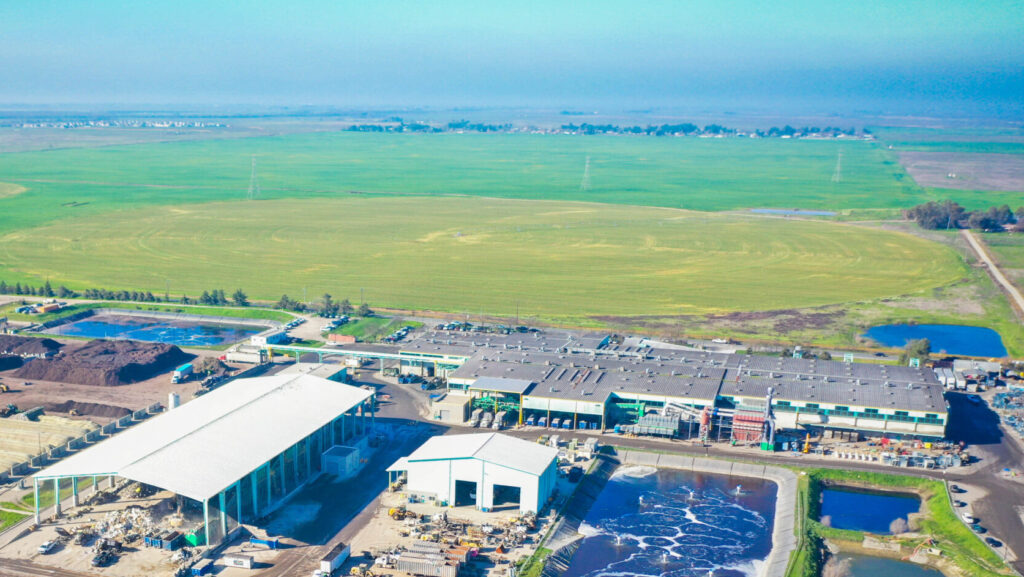
In den letzten Jahren hat die WPWMA nicht nur sichergestellt, dass die im SWOP beschriebenen bewährten Verfahren täglich eingehalten werden, sondern auch massiv in Technologien und Infrastruktur zur Geruchsreduzierung investiert, um ein noch besserer Nachbar für Anwohner und Unternehmen in der Nähe zu sein: